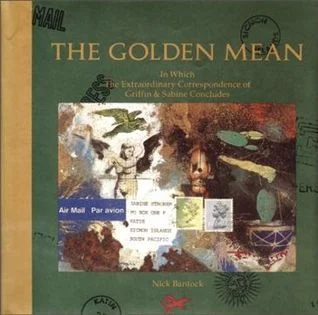
In the vast landscape of literature, certain books don't just tell a story; they invite you to live within its pages, to touch and feel its essence. Nick Bantock’s The Golden Mean Book is unequivocally one such masterpiece. As the third and concluding installment of the original Griffin & Sabine trilogy, this 1993 illustrated epistolary novel isn't merely read—it's experienced. Published by Chronicle Books, it solidified Bantock's reputation for innovation, weaving a complex narrative through a stunning blend of prose, visual art, and tactile interaction that captivated millions and redefined the very concept of a book.
At its heart, The Golden Mean Book continues the extraordinary correspondence between the enigmatic artists Griffin Moss and Sabine Strohem. Their telepathic bond, which began across continents, deepens into a profound mystery as urgent questions about their connection mount. Readers are pulled into a world fraught with new obstacles, including a sinister intruder, challenging Griffin and Sabine’s passionate pursuit of union. This isn't just a love story; it's a profound exploration of connection, identity, and the elusive balance between opposing forces, all presented in a format that remains utterly unique.
A Masterpiece of Interactive Storytelling: Unpacking The Golden Mean Book
What truly sets The Golden Mean Book apart is its groundbreaking format. Nick Bantock, with his distinctive artistic flair, crafted a book that transcends traditional reading. The pages come alive with original paintings, but the real magic lies in the removable postcards and letters tucked into actual envelopes. This ingenious design transforms the act of reading into an intimate, almost voyeuristic thrill, as if you are secretly delving into someone else's private mail. Each letter unfurls a new layer of the story, each postcard a visual clue, inviting readers to participate actively in the unfolding drama.
This innovative format seamlessly merges prose and visual art, creating a multi-sensory experience. The tactile pleasure of slipping a letter from its envelope, unfolding it, and then returning it, connects the reader to the characters on a deeply personal level. It’s a deliberate slowing down of the reading process, forcing engagement and contemplation that is rare in modern literature. Bantock's approach wasn't just a gimmick; it was integral to the narrative, reflecting the intimate and often fragmented nature of Griffin and Sabine's correspondence. The physical interaction mirrors the intellectual and emotional journey of uncovering their shared mystery. For those accustomed to passive reading, The Golden Mean redefined literary art by demanding active participation.
The Tactile Thrill: Experiencing Bantock's Artistry
- Unveiling Secrets: The act of opening an envelope adds a layer of suspense and discovery, enhancing the narrative's mystery.
- Art as Narrative: Bantock's original paintings aren't mere illustrations; they are vital components of the storytelling, conveying emotions and clues wordlessly.
- Sensory Engagement: The weight of the paper, the texture of the envelopes, and the unique design elevate the reading experience beyond just deciphering text.
- Collector's Delight: Each book becomes a personal archive, a tangible collection of the characters' most intimate thoughts and expressions.
Journey into Mystery: Themes and Symbolism within The Golden Mean
Beyond its innovative format, The Golden Mean Book delves into a rich tapestry of themes and symbolism that elevate it to a profound work of art. The narrative of Griffin and Sabine’s telepathic connection grows increasingly murky, prompting a desperate search for neutral ground amid suggestions of parallel realities and external threats. Bantock masterfully explores the delicate balance between opposites: love and fear, male and female, body and mind, and crucially, word and image. This balancing act is not just a thematic concern; it's embedded in the very structure of the book, where written words complement and contend with evocative imagery.
The story is steeped in a romantic, alchemical narrative, hinting at a transformative process not just for the characters, but for the reader. Bantock incorporates allusions to Jungian psychology, mythical ceremonies, and the Tarot, adding layers of depth and intellectual intrigue. Readers are invited to ponder the nature of synchronicity, the collective unconscious, and the spiritual journey of self-discovery. The sinister intruder, the mounting obstacles, and the blurring lines between reality and imagination all serve to deepen the mystery, pushing Griffin and Sabine—and the reader—to question everything they thought they knew about their extraordinary bond.
Unraveling the Mystical Threads:
- Jungian Archetypes: Explore how Griffin and Sabine might represent anima and animus, seeking integration.
- The Alchemical Process: Consider the narrative as a quest for psychic transformation, turning base elements into gold.
- Symbolic Imagery: Pay close attention to the details in Bantock's art, as they often hold keys to deeper meanings and foreshadow events.
Nick Bantock's Artistic Vision: The Genius Behind The Golden Mean Book
The singular success of The Golden Mean Book and the entire Griffin & Sabine trilogy is inextricably linked to the extraordinary vision of Nick Bantock. Schooled in England with a BA in Fine Art (painting), Bantock's career has spanned a breathtaking array of artistic disciplines, including paintings, drawings, sculptures, collages, and prints. His work has been exhibited globally, and his retrospective at the Museum of Outdoor Arts in Denver in 2010 stands as a testament to his prolific and varied output. Before Griffin & Sabine, Bantock was already an accomplished artist, creating artwork for over 300 book covers for literary giants like Philip Roth and John Updike, and designing theater posters for London productions featuring renowned playwrights and actors.
It was this rich background in both visual art and commercial design that allowed Bantock to conceive a book like no other. His fusion of literary and visual elements didn't just tell a story; it created a new genre in publishing, often referred to as a "multimedia book" or "interactive novel." His work earned widespread praise for its "bewitching visual sorcery" and "fantastical storytelling," appealing equally to poetic and artistic sensibilities. The trilogy's remarkable success was largely a word-of-mouth phenomenon, topping bestseller lists and selling millions of copies worldwide, with the first three volumes alone spending over 100 weeks on the New York Times bestseller list. Over 5 million copies of the series have sold, translated into 13 languages, cementing Bantock's legacy as a true innovator.
Why The Golden Mean Book Endures: A Lasting Legacy
Even decades after its initial publication, The Golden Mean Book continues to captivate new generations of readers. Its enduring appeal lies not just in its compelling story or innovative format, but in its ability to offer an experience that is increasingly rare in our digital age. In a world saturated with fleeting digital content, Bantock's creation stands as a powerful testament to the magic of the physical book and the enduring power of thoughtful, deliberate engagement.
The success of this groundbreaking book proved that readers craved more than just words on a page. They yearned for immersion, for beauty, and for a deeper connection to the narrative. Bantock didn't just write a book; he crafted an artifact, a treasure to be held, opened, and explored. Its influence can be seen in subsequent interactive books and art-driven narratives, although few have managed to replicate the pure magic and critical acclaim of the Griffin & Sabine series. For those seeking a unique literary journey, an intersection of art and storytelling, diving into The Golden Mean Book is an unparalleled experience.
To truly appreciate The Golden Mean Book, consider these tips:
- Slow Down: Resist the urge to rush. Take time to examine each illustration and read each letter carefully.
- Engage All Senses: Feel the paper, notice the colors, and imagine the characters' emotions as you uncover their correspondence.
- Reflect: The themes of balance and mystery are complex. Allow yourself time to ponder their implications beyond the immediate narrative.
- Revisit: Like a complex piece of art, the book reveals new layers with each reading, making it a valuable addition to any collection.
In conclusion, The Golden Mean Book by Nick Bantock is far more than just a novel; it is an immersive artistic experience, a masterclass in interactive storytelling, and a foundational text in the realm of hybrid literature. It stands as a timeless reminder of how creative genius can push the boundaries of a medium, offering readers not just a story, but a profound and unforgettable journey into the heart of imagination and human connection. Its legacy continues to inspire, proving that true innovation in publishing comes from daring to merge art and narrative in the most enchanting ways.